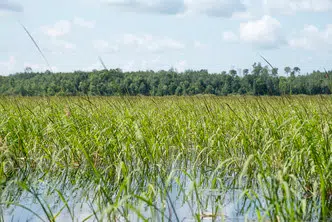
Hay Point Wildlife Management Area, Moose Lake, wild rice
As the 2026 wild rice season approaches, the Minnesota Department of Natural Resources reminds harvesters that, while Aug. 15 is the earliest possible legal harvest date, rice stands must also be ripe before they can be harvested legally.
“While Aug. 15 is the official opening date, most rice waters aren’t ripe by that date,” said Ann Geisen, Minnesota DNR wildlife lake specialist. “Trying to harvest rice before it’s ripe can damage the plants. Damaged plants mean fewer grains for harvesters, wildlife, and fewer grains to grow rice plants next year. We remind harvesters to respect the resource and make sure the kernels are ready.”
People interested in harvesting need to know the regulations and can check out the Minnesota DNR website (mndnr.gov/wildlife/
Harvesters are allowed to take ripe wild rice during the harvesting season that runs from Aug. 15 through Sept. 30, but Minnesota’s green rice law makes it illegal to harvest unripe or “green” rice, even within the dates of the harvest season. So, although rice beds might look like they are ready, ricers must make sure rice is ripe before attempting to harvest it.
According to Geisen, there are a few things to look for to know if rice is ready:
- The bottom part of the plant has started to turn brown. When rice kernels are ripe, the rest of the plant starts to die back for the season. If the bottom part of the stems and leaves are starting to turn brown, this is a sign that the kernels might be ready.
- The inside of the kernels are firm, not soft or milky. As the kernel develops inside the hull, it starts out soft and milky. As it gets ripe, the inside of the kernel becomes firm, with no liquid present. If you break a kernel and it snaps instead of bends, that means the kernel is ripe.
- When the plant is gently shaken, the kernels easily fall off the plant. This is the most important sign that the rice is ripe. If the kernels are not falling easily, the rice is not ripe. If the kernels are not falling easily, some people hit the plant harder. This is what damages the plants.
Harvesters are required to be licensed unless they are residents under 18 years of age and accompanied by a licensed harvester. Tribal members who possess a valid Tribal identification card from a federally recognized Tribe located in Minnesota do not need a state wild rice harvesting license.
Harvesters also need to know where rice harvesting may be restricted, including national parks, national wildlife refuges, Scientific and Natural Areas and American Indian reservations. Details about these restrictions and other regulations are available on the Minnesota DNR website (mndnr.gov/regulations/
Minnesota DNR wildlife staff compile a wild rice harvesting outlook report each year. The report will be available by Aug. 17 on the Minnesota DNR’s wild rice management webpage (mndnr.gov/wildlife/
Early reports from Minnesota DNR and Tribal biologists indicate favorable conditions across central and northern Minnesota, with individual waters ranging from fair to great.
“With drought conditions throughout much of Minnesota, water levels on lakes and rivers are lower than normal. Some rice waters may not be accessible by canoe,” Geisen said. “Harvesters definitely need to scout ricing waters to ensure access.”
The Minnesota DNR sends out periodic newsletters about rice harvesting topics. People can sign up to receive the email newsletters on the Minnesota DNR homepage (mndnr.gov) by finding the “get email updates” box, entering an email address, and selecting the “go” button. Then in the subscription list, check the box for “wild rice harvesting.”
Since wild rice is ripening at the same time as Minnesota’s early waterfowl hunting seasons, over-water waterfowl hunters are urged to be aware of wild ricers nearby no matter where they hunt. Those who plan to hunt the early teal season on the Leech Lake, White Earth, or Mille Lacs reservations should be aware of hunting restrictions on or near wild rice waters. Important information about these restrictions is available on page 48 of the Minnesota Hunting Regulations available on the Minnesota DNR website (mndnr.gov/regulations/hunting





Comments