KFGO file photo
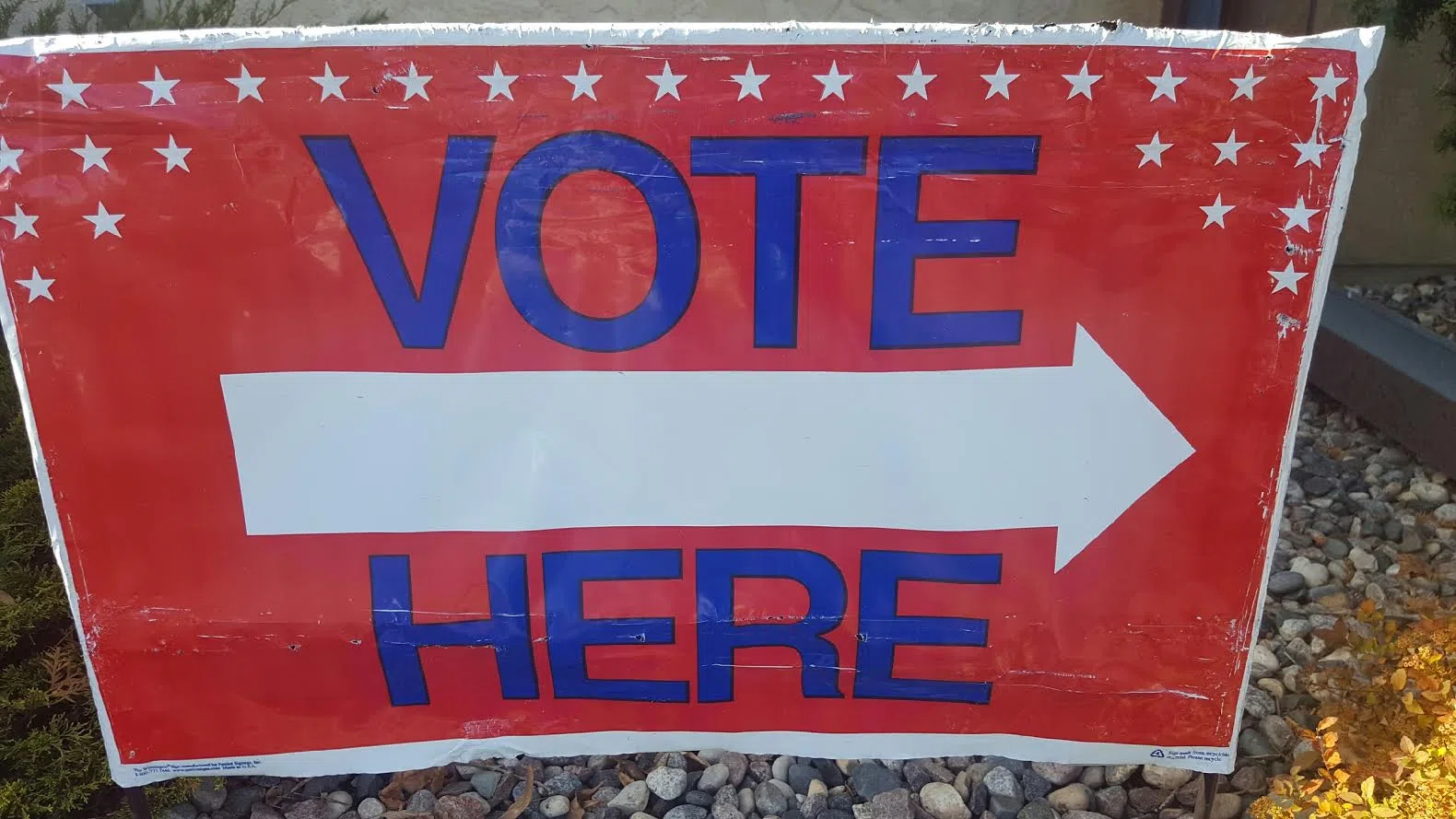
PIERRE, S.D. (South Dakota Searchlight) – County auditors and the state’s lead election official disagree about how to handle a delay of early and absentee voting for the June 2 primary election in South Dakota.
Codington County Auditor Brenda Hanten told local media on Wednesday that the county would begin early and absentee voting on time by using sample ballots as the county waits for official ballots, under the guidance of South Dakota Secretary of State Monae Johnson.
Hanten walked back those plans on Thursday, telling South Dakota Searchlight she hadn’t yet discussed the plan with her state’s attorney when she made those comments. Codington County will not use sample ballots and will wait until official ballots are mailed.
Ballot printing has been delayed due in part to a quirk of the calendar that created an unusually short window between the filing deadline for candidate petitions and the start of early voting. Earlier this year, lawmakers declined to heed warnings from county auditors and apply a fix for this year’s election, citing concerns about changing the laws governing a candidate petition process that was already underway.
A Thursday press release from the Secretary of State’s Office cited two state laws, one of which doesn’t mention sample ballots, that the office said support the option for county auditors to use sample ballots to accommodate absentee voting until they receive their official ballots.
Early voting is supposed to begin Friday, but county auditors alerted the public this week that it will be delayed. No one knows how long the delay will be, but they hope it will not last longer than April 24.
Split between county auditors and secretary of state
Hanten joined several other county auditors who told South Dakota Searchlight they are not following Johnson’s guidance. Auditors discussed the potential use of sample ballots earlier in the year when they were warning lawmakers about the expected delay in early voting. Auditors ultimately rejected the sample ballot option, Lincoln County Auditor Sheri Lund said, because South Dakota state law says sample ballots can be used “if the supply of official ballots has been completely exhausted.”
“We can’t run out of ballots if we haven’t even received them,” Lund said. She brought the issue to the Lincoln County state’s attorney, who agreed with her, she said.

Spokesman Tony Mangan with the state Attorney General’s Office told South Dakota Searchlight the office was not consulted about the sample ballot law before the Secretary of State’s Office issued its guidance on the matter.
Auditors wouldn’t be able to track sample ballots the same way as official ballots, said Harding County Auditor Kathy Glines, and auditors would risk a judge ruling the practice illegal and throwing out sample ballots used for voting.
“We are absolutely not going to use sample ballots to vote. That’s an integrity issue,” Glines said.
“Which law do you want us to break?” Glines added. “The most important thing to us is to protect the ballot and protect the vote. If we start to use sample ballots, we lose that objective.”
Glines has been an auditor since 1991. She and eight other auditors started to provide their own advice and guidance to auditors throughout the state in recent years.
“We work together so we’re on the same page and not just hoping someone shows up on our behalf,” Glines said.
The Secretary of State’s Office did not issue a press release to the public about the delay in early voting until Thursday — one day before early and absentee voting were supposed to start — and did not respond to several calls or emails beginning earlier in the week from South Dakota Searchlight, or immediately update the office’s website, leading to conflicting media reports about the status of early voting.
The Thursday press release from the Secretary of State’s Office listed a number of factors leading to the delay in early voting, such as a tight schedule, pending challenges to candidates’ nominating petitions, a more complicated process due to lawmakers’ introduction of federal-only ballots in the state, and the newly required combination of school and city elections with the June primary and November general elections.
Criticism of secretary of state, legislators
Johnson, a Republican, is up for reelection this year.
Democratic challenger Terrence Davis said Johnson’s lack of communication and planning undermine confidence in elections and create unnecessary barriers for voters. He added that South Dakotans should still trust the election process even if they “don’t trust the administrator.”
“This is a lack of good statesmanship and lack of a good leader,” Davis said. “Uniformity and consistency breed trust.”
State Rep. Heather Baxter, R-Rapid City, is challenging Johnson for the Republican nomination.
“These timing issues are critical and I look forward to working with all stakeholders as secretary of state to ensure seamless processes in the future,” Baxter said.
Glines called the start to the election season “absolute chaos.” She said state lawmakers deserve blame for not passing a legal fix to avoid the time crunch.
“We knew it was going to be a perfect storm. I’m putting 100% of the blame on the Legislature for not listening to us on that,” Glines said, adding, “I hate to throw them under the bus, but you guys told us you didn’t care. So here we are.”
To earn a place on the ballot, prospective statewide candidates from political parties had to gather the required number of petition signatures from registered voters and file them by the last Tuesday in March. Through a quirk of the calendar, there were five Tuesdays in March this year, and the last one fell on March 31. That left 17 days before the beginning of early voting for the review and certification of petitions and the printing of ballots.
Early and absentee voting is required by state law to begin no later than 46 days before the election, and ballots must be printed 48 days before.
Lawmaker responds
Earlier this year, state lawmakers changed the legal deadline for the filing of nominating petitions to the third Tuesday in March, but declined to include an emergency clause in the legislation that would have made it effective immediately. The law therefore won’t take effect until July 1, after the June 2 primary.
Because petition circulation had begun in January and was still underway, some lawmakers were against changing the deadlines for prospective candidates who’d been operating under the assumption of a March 31 deadline.
House Majority Leader Scott Odenbach, R-Spearfish, said some lawmakers viewed the emergency clause as an “incumbent protection measure” that would have disadvantaged challengers who needed more time to gather petition signatures. Absentee voting “goes on way too long” in South Dakota, Odenbach added, which contributed to his rejection of the emergency clause.
“Auditors and the secretary of state will have to find their way through this year and then the deadline issue should be resolved in future years,” Odenbach said. “I don’t think anybody will be disenfranchised because they only have 40 days to vote early rather than 45.”
Neither Glines nor other auditors could estimate when early voting would start. Pennington County Auditor Sabrina Green said the county’s ballots are being printed, and she’ll update her residents when voting can begin.
Glines’ biggest concern is equal opportunity for voters. She is worried some counties will have more early voting time than others because of differences in when ballots arrive.
“We want every voter to get the same kind of access, and we want every voter across the state to be equal,” Glines said. “The way this is panning out, one county might get 43 days of early voting while another gets 40 days. That hurts perception.”
But Glines said voters should not be concerned about the election as a whole.
“The election is not in jeopardy. It’s going to go on. We’re going to pull it off,” Glines said. “We just need to get past this hurdle.”





Comments