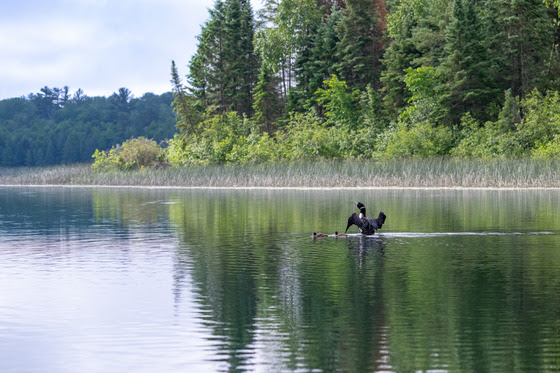
Loons on Mantrap Lake
Saturday, Sept. 26, is National Public Lands Day, the largest single-day volunteer event for public lands in the United States. It is also National Hunting and Fishing Day, which recognizes the contributions of hunters and anglers to wildlife and habitat conservation.
In keeping with these national events, Gov. Tim Walz has proclaimed Saturday, Sept. 26, as Public Lands Day in Minnesota, recognizing the vital role public lands play in Minnesotans’ quality of life. The Minnesota Department of Natural Resources encourages people to celebrate this special day by getting out on public lands to recreate, volunteer, or a bit of both.
This year’s Public Lands Day also coincides with the 75th anniversary of wildlife management areas in Minnesota, which are public lands managed by the DNR. These habitat-rich, public areas provide havens for wildlife and recreational opportunities for people. Minnesota’s WMAs give access to 1,521 public wildlife areas encompassing almost 1.4 million acres of field, forest and wetlands across Minnesota. To learn more about the history of WMAs and the diverse experiences and habitats that can be found in them, visit the Minnesota DNR’s WMAs webpage (mndnr.gov/wmas).
“Public Lands Day recognizes those areas and outdoor experiences that enrich the lives of everyone who lives in and visits Minnesota,” Minnesota Department of Natural Resources Commissioner Sarah Strommen said. “This year, we’re especially excited to celebrate 75 years of WMAs, an unparalleled system of public lands made possible through the dedication and generosity of generations of volunteers, donors, and license buyers.”
Overall, the DNR manages 5.6 million acres of public land, which includes WMAs, state parks and recreation areas, aquatic management areas, scientific and natural areas, and state forests. The DNR depends on strong partnerships with the 11 federally recognized Tribal Nations that share geography with Minnesota, as well as federal, state, local and nonprofit partners, and more than 14,500 volunteers to collectively steward, manage, protect and conserve public lands now and into the future.
Find information about the recreational, economic, public health, and climate benefits of DNR-managed lands and how people can connect to the outdoors on the DNR website (mndnr.gov/publiclands).
ngers off the trigger and outside the trigger guard until ready to shoot.




Comments